
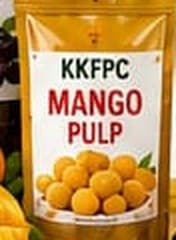
 Own label
Tropical Fruit Pulps
Mango Pulp
Alphonso and Totapuri mango pulp processed within hours of harvest, standardised on Brix and acidity for beverage, dairy and bakery use.
MOQ1 MT for standard grades
Farmer owned food manufacturing · Karnataka, India · Exporting worldwide
White label and private label food manufacturing from a farmer owned plant in Karnataka. Twenty-four processing lines, a research team of thirteen led by PhD food scientists, and a library of formulations already running in production ready to carry your name. Bring your recipe, or use ours.
18 in house, 6 in our network
Led by PhD food scientists
Across 44 categories
On an existing formulation
What we do
Most manufacturers offer one arrangement and describe it three ways. These are genuinely different, and which one suits you depends on whether your brand or your formulation is the asset.
Take a formulation that is already developed, tested and running in production, put your brand on it, and be on shelf in weeks rather than the eighteen months a plant of your own would take.
A thirteen-strong nutrition and food technology team, led by food scientists who hold PhDs, developing formulations, running shelf life studies and solving the problems that sink most new food products.
Already have a recipe that works in your kitchen? We scale it to a production line without losing what made it work, and hand back documented process parameters you own.
Eighteen processing lines under our own roof, plus a vetted network of partner manufacturing units for freeze drying, vacuum frying and cold pressing. One counterparty, one specification, one quality standard.
Watch
Two short films, the first on how white label works here, the second walking the product range. Both shot around our own plant and our own products.
Catalogue
298 products across 44 categories, every one of them available under your own brand.
0 products · 3 sub-categories
Shelf stable meals and instant mixes that need no cold chain
0 products · 2 sub-categories
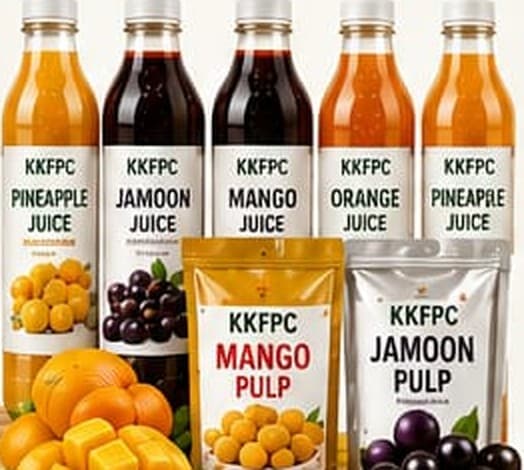
Farmer sourced pulp processed within hours of harvest
0 products · 3 sub-categories
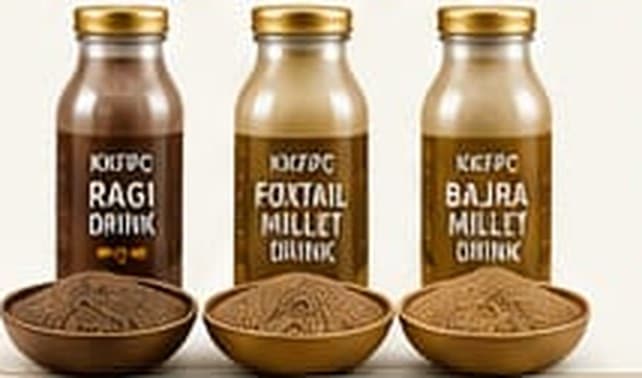
Juices, nectars, functional drinks and millet beverages
0 products · 3 sub-categories
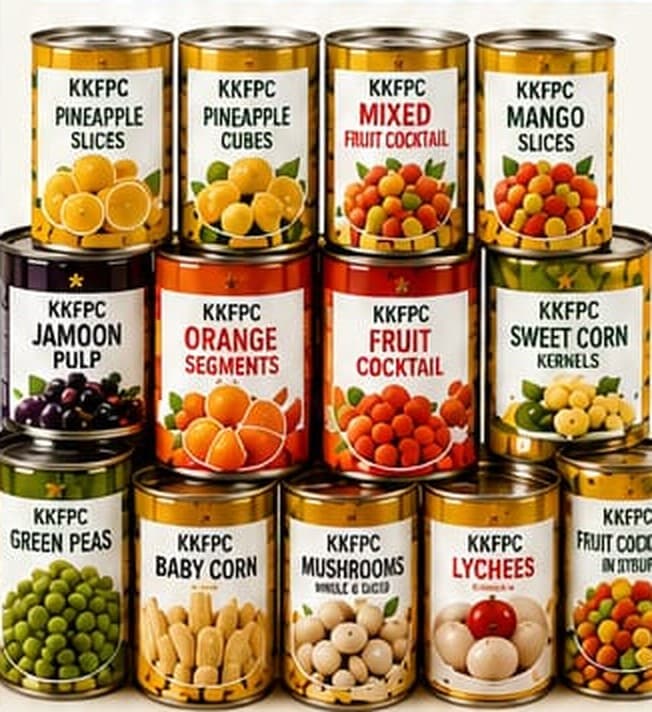
Export grade canning in 850 g tins and institutional formats
0 products · 3 sub-categories
India's deepest millet portfolio: flour to finished snack
Ready to carry your label
These are already developed, tested and running. Put your brand on them and you skip the development cycle entirely.
Own labelTropical Fruit Pulps
Alphonso and Totapuri mango pulp processed within hours of harvest, standardised on Brix and acidity for beverage, dairy and bakery use.
 Own label
Tropical Fruit Pulps
Deep-purple jamoon pulp with its anthocyanin colour intact: a functional-beverage ingredient with a short, demanding season.
Own labelFruit Juices & Nectars
Ready-to-drink mango beverage, pasteurised and hot filled, with pulp content and Brix set to your specification.
Own labelFruit Juices & Nectars
Pineapple juice from our dedicated pineapple line, made from fruit grown in the surrounding DHI Source belt.
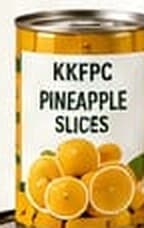 Own label
Canned Fruits
Uniform pineapple rings in syrup, canned in 850 g tins with drained weight verified before despatch.
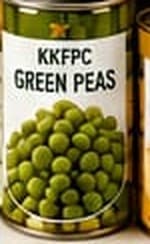 Own label
Canned Vegetables
Tender green peas, blanched and canned at peak condition: high in protein, no added colours, long ambient life.
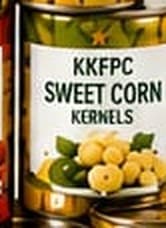 Own label
Canned Vegetables
Whole sweet corn kernels in brine, naturally sweet with no added colours or preservatives.
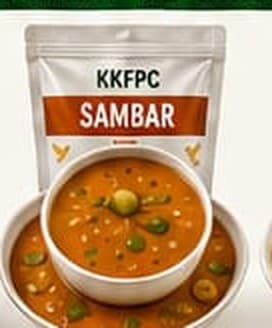
Own labelRetort Ready to Eat Meals
South Indian sambar in a retort pouch: twelve months at ambient, no preservatives, ready in ninety seconds.
Research & development
Most contract manufacturers can run what you hand them. Fewer can tell you why your formulation will not survive a retort, or why your millet flour will turn rancid in month three, or which of the claims on your artwork the regulations will not let you print.
That is what this team is for. They develop formulations from a brief, scale kitchen recipes to a production line, run accelerated and real time shelf life studies, and review your labelling before anything reaches a printer.



The plant
No competitor we looked at publishes their equipment list. We publish all 24, including which six run at partner units in our network rather than under our own roof.
Shelf stable ready to eat meals in retort pouches and trays, sterilised to commercial sterility with no preservatives and no cold chain.
In house PET bottle blowing with beverage filling: juices, functional drinks, vinegar, coconut water and packaged water in your own bottle shape.
Aseptic-grade pulps and purees: mango, guava, pineapple, tomato, papaya, banana, jackfruit, amla, tamarind and wood apple.
Shelf stable canned fruits, vegetables and curries in lacquered food grade tins with years of ambient shelf life.
Individually frozen fruits and vegetables that keep their shape, colour and cell structure through the cold chain.
Thermal pasteurisation for juices, nectars and liquid foods: microbiologically safe with minimal impact on fresh flavour.
Why us
Some of this is structural advantage we did not have to build. Some of it is a deliberate decision to tell buyers things our competitors would rather keep vague.
Fruit comes from member farms in our own district. The window between harvest and processing is the single biggest determinant of colour, Brix and aroma in a pulp, and ours is measured in hours. That is not something a processor sourcing from three states away can buy their way around.
Every product page carries the minimum order, the lead time and the shelf life. Competitors hide all three behind a contact form, which loses the buyer at exactly the stage they are trying to make a decision.
Eighteen lines are ours. Six run at vetted units in our network. Nearly every manufacturer uses partner capacity for something, freeze drying and vacuum frying are capital intensive enough that very few own them. The question is whether they tell you.
Thirteen technologists led by PhD food scientists. A recipe that works on a stove usually does not survive a retort unchanged. Knowing that in the pilot is much cheaper than knowing it in month four.
Changing manufacturers for your second product is slow and expensive. With 24 lines across retort, canning, beverages, millets, extrusion, spices and oils, your next three products can stay in the same building.
Batch-wise Certificate of Analysis, recorded F0 values on thermally processed product, documented process schedules. When a modern trade buyer or an export customer asks, you have it ready.
Resources
Guides on what private label actually costs, how MOQ works, and which preservation technology suits your product. Written to be useful whether or not you end up working with us.
Millets · 4 min read
Millets have policy support, consumer interest and margin. They also have a technical problem that kills most products within months of launch.

Private Label · 4 min read
Three terms, three different commercial arrangements, and three different answers to the only question that matters at the end: who owns the formulation.

Private Label · 6 min read
What private label actually costs, what MOQs are realistic, how long it takes, and the questions that separate a manufacturer who will look after you from one who will not.
Questions we get asked
It depends entirely on the category. Spices and dry blends start around 200 kg, instant mixes around 500 kg, extruded snacks from 2,000 packs, retort pouches from 2,000 pouches with a 100 kg pilot first, beverages from 5,000 bottles, and canned products from 1,000 cases because tin minimums are the highest in food. We publish the MOQ on every product page rather than hiding it behind a contact form.
Yes. That is contract manufacturing, and it is one of the three arrangements we work under. You bring the formulation, we scale it to a production line without losing what made it work, and you keep ownership of it. We hand back documented process parameters that belong to you. We sign a confidentiality agreement before you share anything.
Using one of our existing formulations, two to four weeks from order to despatch once packaging is ready. Adapting a formulation to your brief, four to six weeks. Developing something new or scaling your own recipe, eight to sixteen weeks including a pilot batch and shelf life validation. Packaging readiness is the most common cause of delay, not production.
Thirteen nutrition and food technology specialists, led by food scientists who hold PhDs. They handle formulation development, scaling recipes from kitchen to line, shelf life validation through accelerated and real time studies, and regulatory review of your artwork and claims before anything reaches a printer.
Yes. You can rent the plant on a batch or shift basis, bring your own raw material, and produce your own product under our supervision. It suits founders validating a product, brands who would rather not share a formulation, and seasonal producers. Note that in most rental arrangements you become the manufacturer of record for regulatory purposes, so your FSSAI licence must cover the category. We will walk you through that.
Eighteen of our 24 lines run under our own roof, including retort, canning, pulping, freezing, pasteurisation, homogenisation, twin screw and hot extrusion, chocolate coating, spice processing, vinegar fermentation, dehydration and millet processing. Six (freeze drying, heat pump drying, vacuum freezing, vacuum frying, virgin coconut oil and cold-press oil) run at vetted units in our manufacturing network, with specification, trials, quality verification and logistics managed by us.
Send us the product, the pack size and the volume you have in mind. You will get back a straight answer on MOQ, lead time and whether the format you are thinking of is the right one, usually within a working day, and including when the honest answer is no.
No payment gateway, no checkout. This is a quote-based B2B catalogue.