
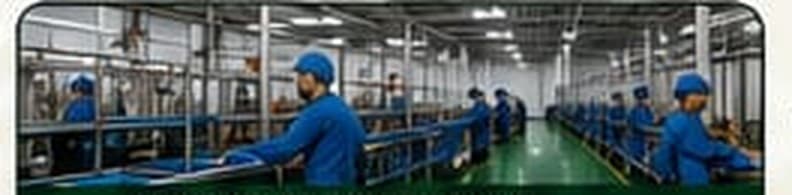
Thirteen food technologists, led by PhD food scientists.
Formulation development, scale up, shelf life validation and regulatory review. This is the team that tells you why your product will not survive the process: before you have printed 20,000 laminates that say it will.
- 13 specialists
- Team size
- PhD food scientists
- Led by
- 8-16 weeks typical
- Development timeline
- Shelf life & label review
- Includes
What this team is actually for
Plenty of plants can run what you hand them. Far fewer can tell you why something will not work, which is the knowledge that saves money.
A few of the things we get asked to solve most often:
"Our millet flour goes rancid by month three." Millet lipids sit in an exposed germ and oxidise fast. The fix is a controlled thermal step that deactivates lipase before milling. Well understood, inexpensive, and routinely skipped by plants that mill millet as though it were wheat.
"The sample was perfect but the production batch tastes cooked." Almost always over-processing. The thermal schedule was set with a blanket safety margin rather than against the product's actual pH and Brix. Fixable, and it should have been set properly the first time.
"Our sauce separates after a fortnight." A particle-size problem, not a thickener problem. High pressure homogenisation drives droplet size down until Brownian motion rather than gravity governs the system.
"We cannot print the claim we built the brand around." Nutritional and health claims are regulated specifically, and "high in protein" is a threshold you either meet or do not. Discovering that after the cylinders are cut is expensive; discovering it in week two is free.
Shelf life, done properly
The number on your pack is a claim, and it should be based on evidence rather than on what a competitor printed.
Accelerated study. Product held at elevated temperature so degradation runs faster, then extrapolated back. Four to twelve weeks for an indication. Useful as a screening tool, and misleading in specific cases. Anything where fat changes phase, or where a different reaction takes over when warm.
Real time study. Stored under the conditions you intend to claim and tested across the full period. Definitive, and it takes as long as the shelf life you want to print.
The responsible approach is both: launch on the accelerated result, run real time in parallel, confirm or adjust. That way you find out from your own samples rather than from a distributor's complaint.
For thermally processed products there is an additional non-negotiable layer. The process itself must be validated by heat penetration study: thermocouples in the slowest heating point, in your actual product, in your actual pack, in our actual retort. A schedule validated for a 300 g pouch does not apply to a 500 g pouch. We establish it per product and hand you the recorded F0 values with every batch.
Ready-to-use formulations
Development is not always the right answer. We maintain a library of formulations that are already developed, validated and running, which is what lets a brand go from first conversation to shelf in weeks rather than months when speed matters more than differentiation.
If one of those fits what you are trying to do, we will point you at it rather than sell you a development project.
How it works
- 1
Brief
What the product is, who buys it, what it should cost on shelf, and what claims you want to make. The last one shapes formulation more than founders expect: a protein claim is a formulation target, not a copywriting decision.
- 2
Concept formulation
First samples against the brief, typically in two to four weeks. We formulate for the process from the start rather than developing something delicious that then falls apart in a retort.
- 3
Iterate
Two to four rounds is normal. If you approve the first sample without changes, you are probably not looking hard enough.
- 4
Pilot and validation
A real batch on the actual line, in the actual pack. Accelerated shelf life study runs alongside, and real time study runs in parallel with your launch so you confirm the claim from your own data.
- 5
Regulatory review
Artwork and claims checked against FSSAI labelling requirements before anything reaches a printer. This is the highest-value fifteen minutes in the whole packaging process.
Questions
How long does product development take?
Typically eight to sixteen weeks from brief to first commercial batch, covering formulation, two to four sample rounds, a pilot batch and accelerated shelf life validation. Anyone promising a genuinely new shelf stable product in three weeks has skipped the shelf life study, and you will find out which one in month four.
Do you charge for development?
Sample development is usually absorbed where it leads to a production commitment. Extended development, pilot batches and formal shelf life studies are quoted separately, and we tell you the cost before starting rather than after. You should be suspicious of anyone offering unlimited free development. It is being paid for somewhere.
Can you help with nutritional claims and labelling?
Yes, and this is where the team earns its keep most visibly. We review artwork and claims against FSSAI labelling requirements before anything reaches a printer. A missing allergen declaration or an unsupportable claim discovered after the cylinders are cut means the entire run is scrap.
Will you develop a product for me and then sell it to someone else?
Not where you have paid for development and we have agreed you own the result. We put that in writing. Where you are taking one of our existing library formulations under white label, it is by definition available to others unless you have negotiated exclusivity, which we will often grant against a volume commitment.
Do you do shelf life testing for products you do not manufacture?
We prioritise products we manufacture, since the process and the shelf life are connected and testing someone else's process gives you a number without the context that makes it meaningful. Talk to us about your situation and we will tell you whether we can usefully help.
Other ways we work
White label & private label
The fastest route from an idea to a product people can buy. Take a formulation that is already developed, tested and running on our line, put your brand on the pack, and skip the eight to sixteen weeks that development would otherwise cost you.
Contract manufacturing
You own the formulation and you intend to keep owning it. We provide the plant, the process engineering and the food technologists to scale it from a kitchen batch to a production line without losing what made it work.
Facility on rental
Rent our licensed facility by the batch or the shift, bring your raw material, and produce your own product under our supervision. It suits founders validating a product, brands who would rather not share a formulation at all, and seasonal producers who do not want equipment idle for ten months.