
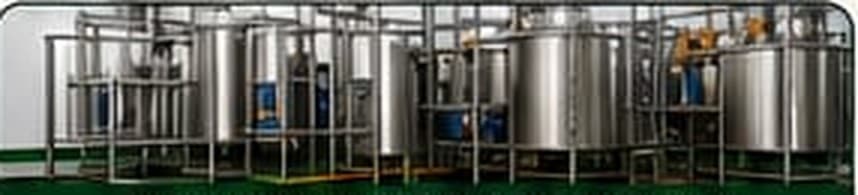
Bring your own raw material and produce it yourself.
Rent our licensed facility by the batch or the shift, bring your raw material, and produce your own product under our supervision. It suits founders validating a product, brands who would rather not share a formulation at all, and seasonal producers who do not want equipment idle for ten months.
- Batch or shift
- Booked by
- Raw material & packaging
- You bring
- Equipment, utilities, operators
- We provide
- You are usually manufacturer of record
- Regulatory
Who this actually suits
Founders validating a product. You produce a genuine commercial batch, in real packaging, on real equipment, without committing to a manufacturer's minimum order or to a plant of your own. That batch is a far better test instrument than a kitchen sample, because it is the product you would actually sell.
Brands who will not share a formulation. Contract manufacturing means handing over your recipe, however good the confidentiality agreement. Renting means nobody but you ever knows it. For a founder whose formulation genuinely is the business, that can be decisive.
Seasonal producers. If your fruit has a six-week window, renting capacity for six weeks is dramatically more efficient than owning equipment that sits idle for forty-six.
Exporters proving a specification. Producing a sample consignment to a buyer's specification before committing to volume.
Who it does not suit, and we would rather say so
Anyone without production knowledge. Renting a line means running it. If you do not know what a correct double seam looks like, or what your F0 needs to be, you are buying equipment access you cannot safely use. Contract manufacturing exists exactly for this, and choosing it is not an admission of anything.
Steady high-volume production. Once you are running consistent volume, contract manufacturing beats rental on per unit economics, because we amortise changeover across a longer run.
Anyone who needs our certifications on their product. This is the subtlety that catches people out. See below.
The regulatory position, in plain terms
This matters more than the day rate.
If you rent our facility and produce your own product, you are the manufacturer for regulatory purposes in most arrangements. Your FSSAI licence must cover the product category. Your name appears on the label as manufacturer, or as "manufactured at" our address.
That is different from contract manufacturing, where we are the manufacturer and our licence and address go on the pack.
The distinction affects liability, labelling, and whether our certifications extend to your product. Usually they do not. A buyer requiring a specific certified product will not accept "the facility is certified" when you were the manufacturer of record.
We will put the exact position for your arrangement in writing before you book. It determines what you can legally print and which buyers you can sell to, so it is not a detail.
A sequence that works
Rent to validate, contract to scale. Prove the product on rented capacity, where your costs are variable and your risk is a single batch. Move to contract manufacturing once volume justifies the minimum order and you would rather someone else carried the quality accountability.
We do both, which means you are not changing plants, and the process knowledge from the first phase stays in the building.
How it works
- 1
Tell us the product and the volume
We confirm which line suits it, what a batch or shift costs, and what the changeover implications are. Allergen changeover on a wet line is several hours of work, and somebody pays for it. We will be clear about who.
- 2
Check the regulatory position
In most rental arrangements you become the manufacturer of record. Your FSSAI licence must cover the product category, and your name goes on the label. We walk you through this before you book, because getting it wrong limits which buyers you can sell to.
- 3
Book the slot
Scheduled against line availability. Seasonal products are worth booking well ahead: fruit lines are heavily committed during harvest.
- 4
Produce
You bring raw material and packaging. Our operators run the equipment, or your team does with our supervision. Our laboratory is available for in-process and finished testing.
- 5
Take your product
You leave with finished product you made. What you learned about your own process stays with you.
Questions
What does it cost to rent your facility?
It depends on the line and the cycle time. Broad market ranges: simple dry processing ₹5,000 to 15,000 per shift; wet processing ₹15,000 to 40,000 per shift plus utilities; retort and canning ₹25,000 to 75,000 per batch; extrusion ₹20,000 to 50,000 per shift. We quote against your specific product, and we state separately what cleaning, changeover and laboratory testing add.
Do I need my own FSSAI licence to rent?
In most rental arrangements, yes. You become the manufacturer of record, so your licence must cover the product category. We confirm the exact position for your arrangement in writing before you book, because it determines what goes on your label and which buyers will accept your product.
Do your certifications cover product I make on rented capacity?
Usually not. Our certifications attach to us as manufacturer. Where you are the manufacturer of record, a buyer asking for certified product will not accept that the facility is certified. If certification matters to your buyer, contract manufacturing is likely the right route instead, and we will say so.
Can I bring my own team?
Yes, working under our supervision, or you can use our operators. They know the equipment, which usually produces a better first batch. Either way, our quality laboratory is available for in-process and finished product testing.
How far ahead do I need to book?
Two to four weeks for most lines. Considerably more during fruit season, when the pulping, canning and freezing lines are heavily committed. If your product is seasonal, talk to us before the harvest rather than during it.
Other ways we work
White label & private label
The fastest route from an idea to a product people can buy. Take a formulation that is already developed, tested and running on our line, put your brand on the pack, and skip the eight to sixteen weeks that development would otherwise cost you.
Contract manufacturing
You own the formulation and you intend to keep owning it. We provide the plant, the process engineering and the food technologists to scale it from a kitchen batch to a production line without losing what made it work.
Product development
Formulation development, scale up, shelf life validation and regulatory review. This is the team that tells you why your product will not survive the process: before you have printed 20,000 laminates that say it will.