
There is a third option between building a plant and handing your product to a contract manufacturer, and comparatively few founders know it exists: rent the line.
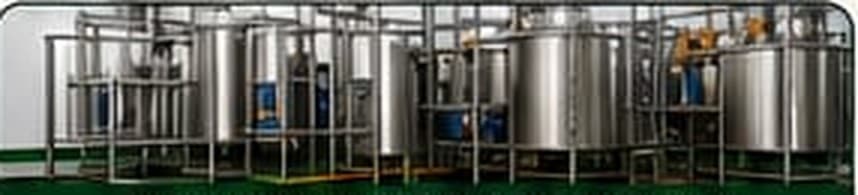
You bring your raw material, you use a licensed facility and its equipment, and you produce your own product under the plant's supervision. It is the model behind the Ministry of Food Processing Industries' common incubation centres, and a number of private plants, ours included, offer the same arrangement commercially.
What renting actually involves
You book a line for a period (typically a day, a shift or a batch) and you get access to the equipment, the utilities and the plant's operators. Depending on the arrangement you may bring your own team, or use theirs.
What you bring: raw material, packaging, your formulation, and usually your own labour or supervision.
What the plant provides: the equipment, the utilities, the FSSAI-licensed premises, the operators who know the machines, and the quality laboratory.
What is negotiable: whether the plant's food technologists are involved, whether you get laboratory testing included, and whether cleaning and changeover are billed separately. Ask about changeover explicitly, a proper allergen changeover on a wet line is several hours of work and somebody is paying for it.
What it costs
Rates vary widely by technology and region, and anyone quoting a single figure is not being useful. Broad ranges in the Indian market:
- Simple dry processing (grinding, blending, packing): ₹5,000 to ₹15,000 per shift
- Wet processing (pulping, juice, sauce): ₹15,000 to ₹40,000 per shift plus utilities
- Retort and canning: ₹25,000 to ₹75,000 per batch, driven by cycle time
- Extrusion: ₹20,000 to ₹50,000 per shift
Add utilities, cleaning and changeover, and laboratory testing if you want it. Under the PMFME scheme, subsidised access at government-supported incubation centres can bring these numbers down substantially for eligible micro enterprises, worth checking before you pay commercial rates.
Who it suits
Founders validating a product. You can produce a genuine commercial batch, in real packaging, made on real equipment, without committing to a manufacturer's MOQ or to a plant of your own. That batch is a far better test instrument than a kitchen sample, because it is the product you would actually sell.
Brands with a formulation they will not share. Contract manufacturing means handing over your recipe. Renting means you keep it. For a founder whose formulation genuinely is the business, that difference can be decisive.
Seasonal producers. If your fruit has a six-week window, renting capacity for those six weeks is dramatically more efficient than owning equipment idle for forty-six.
Exporters testing a specification. Producing a sample consignment to a buyer's specification before committing to volume.
Who it does not suit
Anyone without production knowledge. Renting a line means you are running it. If you do not know what a correct seam looks like or what your F0 should be, you are buying equipment access you cannot safely use. Contract manufacturing exists precisely for this, and choosing it is not an admission of anything.
High-volume steady production. Once you are running consistent volume, per unit economics under contract manufacturing beat rental, because the plant is amortising changeover across a longer run.
Anyone who needs the plant's certifications on their product. This is the subtlety that catches people out. See below.
The regulatory position, which matters
This is where rental arrangements get misunderstood, and the misunderstanding is expensive.
If you rent a facility and produce your own product, you are the manufacturer for regulatory purposes in most arrangements. Your FSSAI licence must cover the product category. Your name goes on the label as manufacturer, or as "manufactured at" the facility's address.
That is different from contract manufacturing, where the plant is the manufacturer and their licence and address appear on the pack.
The distinction affects liability, labelling, and whether the plant's certifications (FSSC 22000, export registrations) extend to your product. Usually they do not. A buyer asking for FSSC 22000 certified product will not accept "the facility is certified" if you were the manufacturer of record.
Get this clarified in writing before you book. It is not a detail; it determines what you can legally print and which buyers you can sell to.
Rental or contract manufacturing?
Ask what you are short of.
Short of capital, have production knowledge, want to keep your recipe: rent.
Short of production knowledge, want somebody accountable for quality: contract manufacture.
Short of both: contract manufacture, and use the manufacturer's technologists. You will spend more per unit and less in total, because the failure modes you do not know about yet are more expensive than the margin you are giving away.
A pattern worth considering: rent to validate, contract to scale. Prove the product on rented capacity where your costs are variable, then move to contract manufacturing once volume justifies the MOQ. It keeps risk low at the stage where risk is highest.
*We offer our facility on a rental basis alongside contract manufacturing, and we will tell you which one fits your stage, including when renting is the cheaper answer for you and the smaller order for us. Ask us about facility rental.*
Want this applied to your product?
Describe what you are making and we will come back with an MOQ, a lead time and an honest view on whether the format you have in mind is the right one.